IUI (Intrauterine Insemination) Specialist in Nagpur: The profound desire to nurture new life, build a family, and experience the joys of parenthood represents one of the most deeply cherished aspirations of the human experience. For many couples, the journey toward conception unfolds naturally and effortlessly. However, for a significant percentage of individuals, the path encounters biological, hormonal, or anatomical hurdles that make spontaneous pregnancy challenging. In modern reproductive medicine, advanced assisted reproductive technologies offer powerful, structured, and less-invasive pathways that bridge the gap between natural conception and complex laboratory treatments. At the very center of this progressive therapeutic landscape stands the expertise of a dedicated Infertility Treatment in Nagpur provider. In the vibrant, medically advanced city of Nagpur, elite healthcare infrastructure and specialized reproductive centers provide couples facing subfertility with world-class medical evaluations, cutting-edge laboratory protocols, and deeply compassionate, individualized care. Whether you have established your early wellness baseline through structured preconception protocols like Pre Conception Counselling, navigated underlying endocrine imbalances managed under structured PCOS Treatment regimens, resolved structural uterine concerns through targeted Uterine polyps Treatment, managed early-trimester adjustments requiring Vaginal bleeding Treatment, prepared for future milestones like an NT Scan in Nagpur or mid-trimester Anomaly Scan in Nagpur, reviewed late-stage biometric development via a Growth Scan in Nagpur, assessed vascular hemodynamics through Obstetric Doppler in Nagpur, sought genetic clarity via Amniocentesis in Nagpur, transitioned into specialized Pregnancy Care roadmaps, planned for high-risk surveillance under High Risk Pregnancy in Nagpur, or secured delivery suites backed by High Risk Delivery with ICU backup in Nagpur, understanding the true clinical scope of Intrauterine Insemination is essential for absolute peace of mind. Societal stigma, generalized misconceptions regarding reproductive procedures, or unfamiliarity with modern clinical pathways can sometimes cause unnecessary hesitation. It is vital to recognize that modern reproductive medicine offers sophisticated, evidence-based, and highly personalized therapies designed to address the root causes of subfertility without relying on generalized or one-size-fits-all assumptions. Finding an expert, empathetic Gynecologist and IUI Specialist in Nagpur is the foundational step in receiving accurate diagnostic evaluations, precise ovulation coordination, and tailored guidance. To truly comprehend the profound scope of IUI care, one must explore the underlying physiological principles, comprehensive diagnostic workups, natural versus stimulated cycles, the sperm washing process, procedural execution, and holistic wellness support. Consequently, approaching IUI requires a multi-dimensional, deeply supportive framework that honors scientific excellence, uncompromising safety, and emotional well-being.
The Physiology of Natural Conception and Where Barriers Arise
To effectively understand and approach Intrauterine Insemination (IUI), it is medically necessary to explore the intricate physiological choreography that governs human natural conception. In a standard menstrual cycle, the journey of reproduction relies on a synchronized sequence of biological events: the maturation and release of a healthy oocyte from the ovary, the production of vigorous and motile spermatozoa, the transit of sperm through the hostile acidic environment of the cervical canal, and the successful union of gametes within the ampulla of the fallopian tube.
During natural intercourse, millions of spermatozoa are deposited into the vaginal vault. However, the vast majority of these sperm fail to navigate the cervical mucus barrier, which acts as a natural biological filter. Only a small fraction of highly motile, structurally normal spermatozoa successfully enter the uterine cavity and ascend into the fallopian tubes.
When subtle barriers exist—such as hostile cervical mucus, mild male factor subfertility, ovulatory dysfunction, or unexplained infertility where gametes fail to meet efficiently—natural conception is impeded. IUI is specifically engineered to overcome these exact physiological bottlenecks by bypassing the cervical barrier entirely and placing concentrated, highly motile sperm directly into the uterine cavity, significantly increasing the probability of fertilization.
Defining Intrauterine Insemination (IUI): Core Principles and Objectives
Intrauterine Insemination is a frontline, low-complexity assisted reproductive technology (ART) designed to optimize the proximity and concentration of viable gametes at the exact physiological moment of ovulation.
The primary objectives and clinical mechanisms of an IUI procedure include:
- Bypassing the Cervical Barrier: Eliminating the destructive acidic environment and hostile mucus of the cervix that often traps or immobilizes sub-optimal sperm.
- Maximizing Sperm Concentration and Motility: Utilizing specialized andrology laboratory techniques (“sperm washing”) to isolate the highest-quality, rapidly progressive spermatozoa while discarding seminal fluid prostaglandins, cellular debris, and immotile sperm.
- Synchronizing with Ovulation: Coordinating the insemination procedure precisely with the release of a mature oocyte, often aided by oral or injectable ovulation-inducing medications.
- Enhancing Gamete Proximity: Delivering concentrated sperm directly into the uterine cavity, shortening the swimming distance required to reach the fallopian tubes where fertilization takes place.
This elegant, minimally invasive procedure serves as an essential bridge between basic medical management and advanced, complex ART procedures like In Vitro Fertilization (IVF).
Clinical Indications for IUI: Who is the Ideal Candidate?
While IUI is a versatile and highly effective treatment modality, patient selection is critical to ensuring optimal success rates. An expert IUI specialist evaluates each couple’s diagnostic profile to determine if IUI is the most appropriate therapeutic intervention.
The primary clinical indications for IUI include:
- Mild Male Factor Infertility: When standard semen analysis reveals mild asthenospermia (reduced motility), mild oligozoospermia (slightly reduced sperm count), or abnormal morphology, sperm washing can successfully concentrate sufficient motile sperm for effective intrauterine delivery.
- Unexplained Infertility: When comprehensive diagnostic evaluations of both partners reveal no definitive physiological abnormalities, yet natural conception has not occurred after twelve months, IUI combined with mild ovarian stimulation is frequently utilized as a successful frontline therapy.
- Ovulatory Dysfunction: Women experiencing irregular ovulation or anovulatory cycles—such as those managed under structured PCOS Treatment protocols—benefit significantly from IUI combined with controlled ovulation induction.
- Cervical Factor Infertility: Conditions where cervical mucus is anatomically hostile, thick, or contains anti-sperm antibodies that prevent sperm ascent into the upper reproductive tract.
- Ejaculatory or Anatomical Barriers: Mild anatomical challenges or mild erectile dysfunctions where direct intrauterine placement ensures successful gamete delivery.
Careful clinical screening ensures that patients with severe tubal blockages, severe male factor infertility, or advanced maternal age are appropriately directed toward more advanced ART modalities like IVF.
Comprehensive Pre-IUI Diagnostic Evaluation
A successful IUI journey begins with an exhaustive, systematic diagnostic workup. Modern reproductive clinics in Nagpur utilize advanced laboratory testing, high-resolution imaging modalities, and clinical assessments to map out every variable of a couple’s reproductive health before scheduling an insemination cycle.
The comprehensive pre-IUI diagnostic suite encompasses:
- Ovarian Reserve and Hormonal Profiling: Evaluating baseline serum levels of Follicle-Stimulating Hormone (FSH), Luteinizing Hormone (LH), Estradiol, Thyroid-Stimulating Hormone (TSH), Prolactin, and Anti-Mullerian Hormone (AMH) to assess ovarian function and endocrine balance.
- Transvaginal Sonography (TVS) and Antral Follicle Count: Performing meticulous transvaginal scans during the early follicular phase to count resting antral follicles, evaluate uterine volume, measure endometrial thickness, and rule out structural pathologies such as ovarian cysts or endometrial polyps.
- Tubal Patency Verification: Confirming that at least one fallopian tube is completely open and unobstructed via diagnostic modalities such as Hysterosalpingography (HSG) or saline infusion sonohysterography. (Note: Tubal patency is an absolute prerequisite for IUI, as fertilization must occur within the fallopian tube).
- Comprehensive Semen Analysis: Rigorous evaluation of male ejaculate assessing volume, concentration, motility, vitality, and morphological characteristics according to strict World Health Organization (WHO) criteria.
- Infectious Disease Screening: Mandatory viral serology testing (HIV, Hepatitis B, Hepatitis C, VDRL) for both partners prior to handling gametes in the andrology laboratory.
This rigorous diagnostic foundation ensures that every subsequent therapeutic intervention is targeted, efficient, and evidence-based.
Natural Cycles versus Stimulated IUI Cycles
Intrauterine Insemination can be performed in either a natural ( unstimulated) cycle or a stimulated cycle utilizing targeted medications to enhance follicular development. The choice of protocol depends on the couple’s underlying diagnosis, age, and clinical history.
1. Natural Cycle IUI:
* Performed without fertility medications.
* The specialist tracks the natural growth of a single dominant follicle using serial transvaginal ultrasound scans and blood hormone assays.
* Once the dominant follicle reaches maturity, a precise hCG trigger injection is administered to time ovulation accurately.
* Indicated primarily for couples with unexplained infertility or cervical factor issues who have regular, predictable ovulatory cycles.
2. Stimulated Cycle IUI:
* Utilizes mild oral medications (such as Letrozole or Clomiphene Citrate) or low-dose gonadotropin injections administered during the early follicular phase.
* Designed to stimulate the development of one to three dominant follicles, increasing the pool of available oocytes and enhancing pregnancy success rates.
* Strict ultrasound monitoring is essential during stimulated cycles to prevent multiple follicular over-development and minimize the risk of high-order multiple pregnancies (triplets or higher).
This tailored approach ensures maximum therapeutic efficacy while maintaining stringent safety standards.
The Andrology Laboratory Role: Sperm Washing and Preparation
The success of an IUI procedure depends heavily on the precision of the andrology laboratory. Fresh seminal fluid contains prostaglandins that can induce severe, painful uterine cramps if introduced directly into the uterine cavity. Furthermore, raw semen contains white blood cells, non-motile sperm, and cellular debris that must be eliminated.
The sperm preparation and washing methodology encompasses:
- Liquefaction and Evaluation: The fresh semen sample is collected in a sterile container and allowed to liquefy at room temperature, after which a preliminary concentration and motility assessment is performed.
- Density Gradient Centrifugation or Swim-Up Techniques: Specialized laboratory media are utilized to separate functional, highly motile spermatozoa from seminal plasma, immotile sperm, and cellular debris. Density gradient centrifugation uses layered silica particle suspensions, where vigorous sperm actively swim through the gradient to form a concentrated pellet at the bottom of the test tube.
- Resuspension in Nutrient Medium: The isolated, high-quality sperm pellet is washed and resuspended in a sterile, buffered physiological culture medium designed to maintain sperm viability and optimizing fertilizing capacity.
- Final Prepared Sample: The final concentrated sample—typically measuring between 0.3 to 0.5 milliliters of fluid containing millions of highly active, rapidly progressive spermatozoa—is loaded into a specialized insemination catheter, ready for immediate clinical delivery.
This meticulous laboratory processing transforms a standard semen sample into a potent, purified suspension optimized for successful fertilization.
Step-by-Step Clinical Walkthrough of the IUI Procedure
Understanding the procedural workflow of an IUI cycle helps alleviate apprehension, empowering couples to approach the appointment with calm confidence.
The step-by-step clinical methodology encompasses:
- Confirmation of Ovulation Timing: The procedure is scheduled precisely 24 to 36 hours after the administration of the hCG trigger injection, or immediately following the natural detection of the LH surge, aligning with the release of the oocyte.
- Patient Comfort and Positioning: The woman reclines comfortably in the gynecological examination suite in a relaxed dorsal lithotomy position.
- Speculum Examination and Cervical Cleansing: A sterilized speculum is gently inserted into the vagina to visualize the cervix. The ectocervix is gently cleansed with a sterile culture medium to remove excess mucus.
- Catheter Insertion and Gamete Delivery: A slender, flexible, sterile IUI catheter containing the prepared sperm suspension is passed gently through the external cervical os, advanced through the endocervical canal into the lower uterine cavity, and the concentrated sperm are slowly and smoothly injected.
- Post-Procedure Rest: The patient rests quietly on the examination table for ten to fifteen minutes following the procedure, after which normal daily activities can be resumed immediately. No bed rest or activity restriction is required.
This meticulous adherence to international reproductive standards ensures that every IUI procedure executed in Nagpur meets elite global benchmarks for precision and safety.
Comparing IUI vs. IVF: Understanding the Right Clinical Pathway
Patients frequently ask whether they should proceed directly to In Vitro Fertilization (IVF) or attempt Intrauterine Insemination. An expert fertility specialist evaluates several critical clinical factors to guide this decision.
The primary comparative parameters include:
- Invasiveness and Complexity: IUI is a low-complexity, non-surgical outpatient procedure that mimics natural fertilization inside the body. IVF is a more complex multi-step laboratory procedure involving controlled ovarian hyperstimulation, minor surgical oocyte retrieval under sedation, and external laboratory fertilization.
- Cost and Accessibility: IUI involves significantly lower financial and pharmacological costs compared to a full IVF cycle.
- Success Rates per Cycle: While IVF generally offers higher cumulative and per-cycle success rates (due to controlled lab fertilization and embryo selection), IUI offers a highly efficient, gentle frontline approach for appropriate diagnoses.
- Primary Clinical Indications: IUI is ideal for mild male factor, unexplained infertility, and young patients with patent fallopian tubes. IVF is mandatory for severe tubal blockage, severe male factor infertility, advanced maternal age, and genetic screening requirements.
A personalized consultation with an experienced specialist ensures that couples embark on the most direct, cost-effective, and successful path toward parenthood.
Nutritional Excellence, Whole Foods, and Reproductive Wellness
Nourishing the maternal and paternal body and optimizing metabolic health play a foundational role in enhancing gamete quality, balancing reproductive hormones, and supporting optimal endometrial receptivity during an IUI cycle.
Nutrient-Dense Whole Foods and Antioxidant Support: Emphasizing an abundant variety of vibrant, antioxidant-rich vegetables, dark leafy greens, clean lean proteins, healthy essential fats (such as omega-3 fatty acids from walnuts and flaxseeds), and complex whole grains provides the vital micronutrients, vitamins (such as Vitamin C, Vitamin E, and folate), and minerals required for optimal cellular replication and mitochondrial energy production within gametes.
Hydration and Metabolic Detoxification: Maintaining consistent daily hydration with pure water and mineral-rich infusions supports optimal cellular fluid balance, systemic circulation, and efficient metabolic waste elimination across all organ systems.
Emotional Resilience and Stress Regulation: Undergoing fertility treatments can be an emotional journey. Incorporating mindfulness, restorative breathing, gentle yoga, and professional counseling regulates cortisol levels, fostering a serene internal environment that supports overall well-being and treatment success.
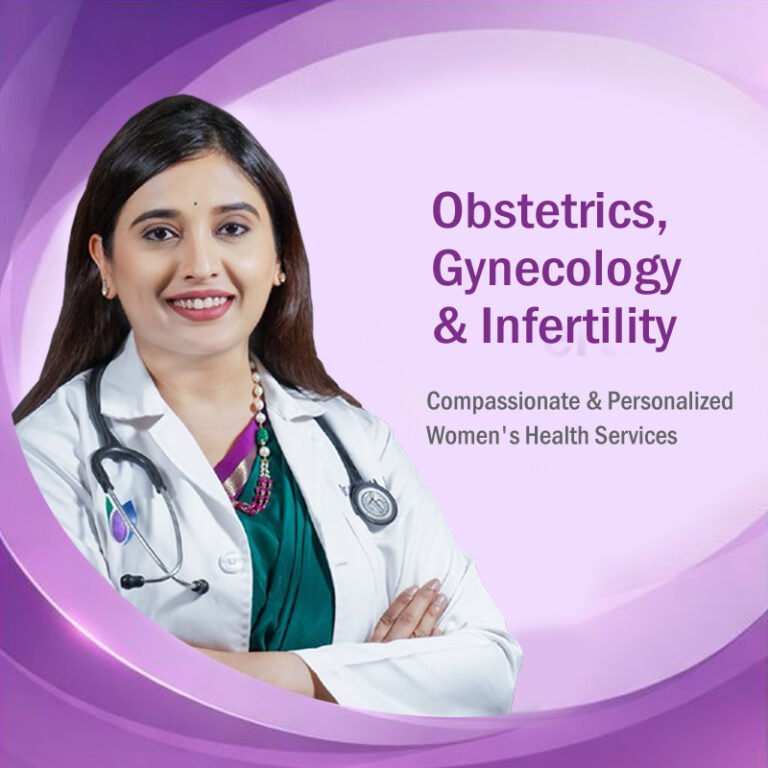
Meet Your Expert : Dr. Samiksha Jain
Dr. Samiksha Jain
Obstetrician, Gynecologist & Fertility Specialist
MBBS, MD (Obs/Gyn) Gold Medalist
Fellowship in Reproductive Medicine (Bangalore),
Fellowship in Minimal Access Surgery (Bangalore),
Advanced Diploma in Reproductive Medicine (Germany)
Dr. Samiksha Jain is a highly accomplished Obstetrician, Gynecologist, and Fertility Specialist known for her compassionate approach and excellence in women’s healthcare. A Gold Medalist in MD (Obstetrics & Gynecology), she combines academic brilliance with advanced clinical expertise to provide the highest standard of care to her patients. Dr. Samiksha Jain is an esteemed Fertility Specialist dedicated to empowering couples through natural, comprehensive, and advanced reproductive health protocols. With her profound expertise in assisted reproduction (IUI/IVF), minimal access reproductive surgery, and high-risk fertility management, she offers state-of-the-art clinical support, ensuring a safe, deeply reassuring, and successful journey toward parenthood for every family.
Frequently Asked Questions (FAQs)
1. What is Intrauterine Insemination (IUI), and how does it work?
IUI is a fertility treatment where washed, concentrated, and highly motile sperm are placed directly into the uterine cavity around the time of ovulation, bypassing the cervical barrier to increase fertilization success.
2. Who is the ideal candidate for an IUI procedure?
Ideal candidates include couples experiencing mild male factor subfertility, unexplained infertility, ovulatory dysfunction (such as PCOS), or cervical factor issues, provided at least one fallopian tube is patent.
3. Is the IUI procedure painful or uncomfortable?
IUI is a quick, virtually painless outpatient procedure similar to a standard Pap smear, requiring no anesthesia and allowing immediate return to normal daily activities.
4. How is sperm prepared in the laboratory before IUI?
Fresh semen undergoes specialized “sperm washing” (using density gradient centrifugation or swim-up techniques) to concentrate motile sperm and remove seminal fluid prostaglandins, cellular debris, and immotile sperm.
5. Can IUI be performed in a natural menstrual cycle?
Yes, IUI can be performed in a natural (unstimulated) cycle by tracking natural ovulation, or in a stimulated cycle using mild oral medications or hormone injections to enhance follicular development.
6. What is the success rate of an IUI cycle?
IUI success rates vary depending on maternal age, diagnosis, and whether the cycle is natural or stimulated, generally ranging between 15% to 25% per cycle, with cumulative success increasing over multiple attempts.
7. How does pre-conception counseling support future reproductive health?
Engaging in proactive Pre Conception Counselling establishes a pristine physiological baseline, optimizing metabolic health and nutrition before attempting fertility treatments.
8. Where can I access expert IUI treatment and compassionate care in Nagpur?
You can schedule your comprehensive fertility and gynecological consultations in Nagpur, allowing expert specialists to guide you seamlessly through your Pregnancy Care roadmap.
Disclaimer: The comprehensive information provided in this extensive article is strictly for educational, informational, and awareness purposes only. It is not intended to be a substitute for professional medical advice, clinical diagnosis, or specialized therapeutic treatment. Always seek the direct, personalized advice of your physician or qualified healthcare provider regarding any medical condition, anatomical concerns, or prior to initiating any new dietary change, physical therapy, or surgical procedure.