
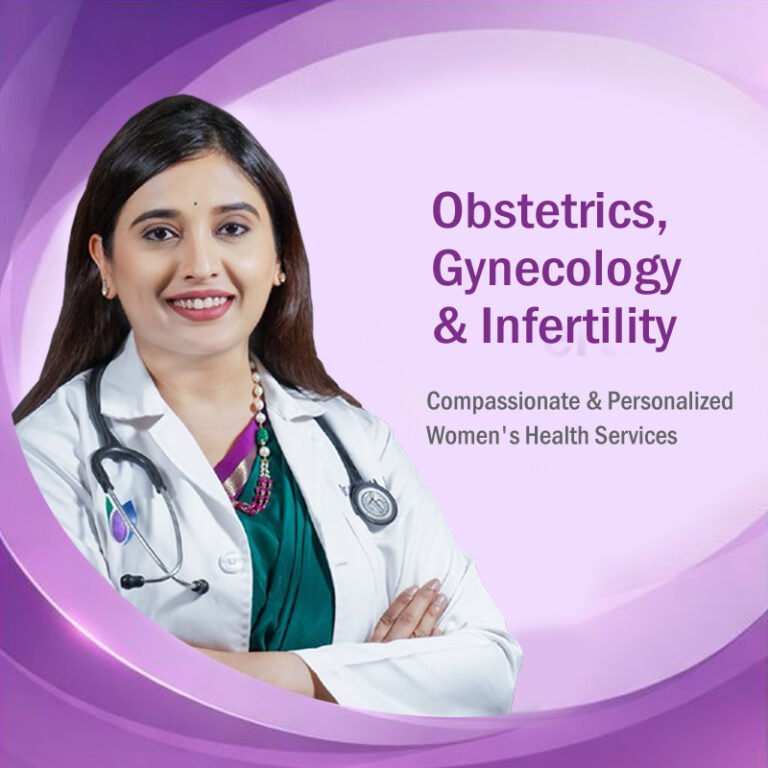
Meet Your Doctor: Dr. Samiksha Jain
Dr. Samiksha Jain is a highly accomplished Obstetrician, Gynecologist, and Fertility Specialist known for her compassionate approach and excellence in women’s healthcare. A Gold Medalist in MD (Obstetrics & Gynecology), she combines academic brilliance with advanced clinical expertise to provide the highest standard of care to her patients. Her qualifications include MBBS, MD (Obs/Gyn) Gold Medalist, Fellowship in Reproductive Medicine (Bangalore), Fellowship in Minimal Access Surgery (Bangalore), and Advanced Diploma in Reproductive Medicine (Germany). Her background in obstetrics, gynecology, fertility medicine, and minimally invasive surgery gives her a broad and refined perspective on pregnancy, labour, and safe childbirth.
Her expertise is especially valuable for women who need pregnancy monitoring, high-risk planning, fertility-related continuity, or delivery preparation after complex reproductive journeys. She is well-positioned to guide women through related services such as Antenatal Checkup, Complete Maternal Care, and High Risk Pregnancy management. For patients who have needed fertility support before conception, her advanced reproductive background also makes the transition from conception to delivery care more seamless and medically consistent.
What Does Delivery or Childbirth Mean?
Delivery or childbirth refers to the process by which a baby is born after pregnancy reaches its final stage. This may happen through vaginal birth, assisted vaginal birth, or cesarean delivery depending on the condition of the mother and baby. Childbirth is a natural physiological event, but in modern obstetrics it is also a carefully monitored medical process because even a normal labour can change quickly. That is why delivery care involves more than just waiting for contractions; it involves assessment, readiness, observation, and immediate response when needed.
In a healthy pregnancy, childbirth may begin spontaneously when the body and baby are ready. The uterus starts contracting rhythmically, the cervix begins to soften and open, the baby descends, and labour progresses in stages. But the exact journey varies from woman to woman. Some labour pains are strong and regular from the beginning, while others develop slowly. Some women need induction if labour does not begin on its own by the expected time. Others may require cesarean delivery if there are signs that vaginal birth may be unsafe. A good delivery plan respects both the natural process and the medical realities.
For women in Nagpur, in Maharashtra, in India, understanding childbirth in advance removes a lot of fear. When the mother knows what labour means, what warning signs to watch for, and when to go to the hospital, she is more likely to feel prepared instead of panicked. That preparation is an important part of modern obstetric care and connects directly to Antenatal Checkup and Childbirth and Care support.
Why Childbirth Planning Matters So Much
Childbirth planning is important because labour is unpredictable, and readiness reduces complications. A woman may have a perfectly normal pregnancy and still need immediate attention once labour begins. She may develop strong contractions, water leakage, bleeding, reduced fetal movements, or blood pressure concerns close to term. Without a clear birth plan, families can lose precious time deciding what to do. With proper planning, the mother knows exactly when to contact the doctor, when to reach the hospital, and what information to keep ready.
Planning also allows the doctor to review the mother’s pregnancy history, previous deliveries, blood reports, ultrasound findings, and fetal position in advance. If the patient has any medical concerns, such as anemia, blood sugar issues, thyroid imbalance, previous cesarean, PCOS, fibroids, or high-risk pregnancy features, the labour plan can be customized. This is especially useful when the pregnancy has required specialist care from the beginning. In many such cases, delivery planning is linked closely with Complete Maternal Care and Antenatal Checkup so that no important detail is missed.
Good childbirth planning also reduces emotional stress. When women and families understand what is likely to happen, they tend to feel more in control. They can prepare a hospital bag, arrange transport, keep documents ready, and understand pain relief or surgery possibilities in advance. This practical preparation is especially valuable in busy medical environments, including those serving women in Nagpur, in Maharashtra, in India.
Types of Delivery
There are different types of delivery, and the best option depends on the medical circumstances of the pregnancy. Vaginal delivery is often the preferred natural route when the baby is in the correct position, labour is progressing well, and there are no major complications. In this process, the baby is born through the birth canal after the cervix opens fully and the mother pushes during the second stage of labour. This is the most common and naturally effective route when conditions are favorable.
Sometimes labour does not begin naturally or progress properly. In such cases, the doctor may consider induction, which means helping labour start with medical methods. Induction is only recommended when it is safe and appropriate. It is not a casual decision; it is based on the mother’s condition, the baby’s status, the pregnancy age, and other clinical factors. If labour progresses but there is concern for mother or baby, the doctor may also use assisted delivery methods when needed. These are selected carefully and only when medically justified.
Cesarean delivery is another major form of childbirth. It may be planned or emergency-based depending on the situation. Planned cesarean sections are commonly considered when there is a previous uterine scar, placenta-related concerns, baby position issues, multiple pregnancy, very high-risk conditions, or medical reasons that make vaginal birth less suitable. Emergency cesarean delivery may be needed if labour does not progress safely or if signs of fetal distress appear. In the right clinical setting, cesarean section is not a failure of childbirth; it is a life-protecting method of delivery that prioritizes safety for both mother and baby.
The right doctor will explain all these options honestly and early, so the mother does not feel shocked at the last moment. This is where specialist-guided childbirth care becomes essential, especially for women managing pregnancy in Nagpur, in Maharashtra, in India.
How the Body Prepares for Labour
Before labour begins, the body starts preparing in subtle but meaningful ways. The cervix may become softer and begin to thin. The baby may move lower into the pelvis. Braxton Hicks contractions may appear from time to time. Some women feel more pelvic pressure, lower back discomfort, nesting behavior, or a change in discharge. These changes do not always mean labour has started immediately, but they can indicate that the body is getting ready.
True labour usually involves regular contractions that become stronger, longer, and closer together over time. The pain pattern may begin in the lower back or lower abdomen and may spread. The contractions often continue even if the mother changes position or rests. Some women also experience a “show,” which may mean a small amount of mucus mixed with blood as the cervix starts to open. Water leakage can also happen when the membranes rupture. These signs should be evaluated by the doctor to confirm whether labour has started and whether hospital evaluation is needed.
Knowing these signs matters because it prevents both panic and delay. A woman who understands the difference between normal pre-labour symptoms and active labour is better prepared to make the right decision. That is one of the reasons antenatal counselling is so important. It creates readiness long before the actual day of delivery arrives.
When Should You Go to the Hospital?
Hospital timing is one of the most important parts of childbirth preparation. Many families worry about reaching too early or too late, but the solution is not guesswork; it is guidance. A woman should contact the doctor or go to the hospital if she has regular contractions, leaking of fluid, bleeding, reduced fetal movements, severe pain, fever, or any symptom that seems unusual. If the pregnancy is high risk, she may need to come earlier than someone with a low-risk pregnancy.
Signs that should never be ignored include heavy bleeding, sudden gush of fluid, decreased fetal movements, persistent headache, blurred vision, breathlessness, severe swelling, or strong abdominal pain. These may point to labour or a complication that needs urgent evaluation. In such cases, the safest decision is not to wait at home. Prompt assessment allows the doctor to decide whether labour is progressing normally or whether intervention is needed. This is especially important for women under High Risk Pregnancy care.
Having a hospital plan ready in advance also helps. Families should know the route, the emergency contact, the likely time to travel, and the documents to carry. When labour starts, clarity saves time and reduces stress. For childbirth in Nagpur, in Maharashtra, in India, this preparedness can make a real difference in the final experience.
The Role of Antenatal Checkups in Safe Delivery
Antenatal checkups are the foundation of safe childbirth. They help the doctor understand how the pregnancy is progressing and whether labour planning should change. Through regular review, the doctor can monitor fetal growth, blood pressure, sugar levels, hemoglobin, placental health, baby position, and overall maternal fitness. These details are crucial because labour is safest when the doctor already understands the complete pregnancy picture.
Women who attend regular antenatal appointments are often better prepared for delivery because they have already discussed signs of labour, possible delivery modes, and hospital timing with their doctor. They are also more likely to have addressed issues like anemia, blood sugar elevation, blood pressure changes, or fetal growth concerns early. That reduces surprises at the time of delivery and allows the obstetric team to respond more effectively.
This is why childbirth should always be seen as part of a larger maternal care pathway rather than a single event. It begins with prenatal monitoring, continues through labour, and extends into postpartum recovery. A full pregnancy care journey may involve Antenatal Checkup, Complete Maternal Care, and then delivery planning itself. The stronger the preparation, the safer the transition into motherhood.
Why Some Pregnancies Need Special Delivery Planning
Not all pregnancies can follow the same delivery path. Some women have a previous cesarean scar, multiple pregnancy, placenta complications, breech presentation, uncontrolled blood pressure, diabetes, fibroids, or a history of infertility treatment. These situations often require more careful birth planning. In some cases, the labour may still be vaginal if conditions are favorable. In others, cesarean delivery may be safer. The right choice depends on the medical context, not on fear or routine alone.
Women who conceived after fertility treatment may also need more structured follow-up because the journey to pregnancy may have involved more medical support. That does not mean the delivery will be difficult, but it does mean the team may choose to monitor carefully and discuss all options in advance. Similarly, women with PCOD/PCOS Treatment history, fibroids, or other reproductive concerns may need a delivery plan that reflects their full medical background.
The best delivery plan is not the one that sounds ideal on paper. It is the one that is safest, realistic, and personalized for the mother and baby. That is the heart of modern obstetric care in Nagpur, in Maharashtra, in India.
How Families Can Prepare Before Delivery
Preparation before delivery is both medical and practical. Medically, the mother should keep up with her antenatal visits, follow the doctor’s advice, take supplements as prescribed, and report any unusual symptoms promptly. Practically, the family should prepare the hospital bag, arrange transport, keep identification documents ready, and understand emergency contact numbers. These small steps can reduce confusion when labour begins.
It is also wise to discuss pain expectations, delivery options, breastfeeding preparation, and postpartum recovery in advance. Some women may want to understand normal labour pain, while others may want to know about cesarean recovery or induction. A good doctor will explain these matters in simple language without creating fear. That kind of clarity helps the mother and family feel ready for the birthing day.
Family support matters greatly too. A calm, informed, and supportive environment can reduce stress and improve the mother’s confidence. Pregnancy and childbirth are physical experiences, but they are also deeply emotional. Respectful support makes the whole process more humane and less overwhelming.
Why Specialist Childbirth Care Matters in Nagpur
Specialist childbirth care matters because childbirth can change quickly, and expert judgment is essential when timing becomes important. A doctor with strong obstetric experience can recognize labour patterns, identify danger signs, and choose the safest mode of delivery. This is especially important for women with previous pregnancy complications, fertility treatment history, or medical conditions that require closer supervision. Specialist care provides not only treatment, but also confidence.
In a modern medical setting, the value of childbirth care lies in timely action, clear communication, and proper planning. Women who are under specialist supervision often feel less alone and more secure because they know that both routine and emergency situations have already been thought through. That is one reason many women prefer coordinated maternity care that includes Childbirth and Care, Antenatal Checkup, and Complete Maternal Care within the same clinical journey.
Stages of Labour and What to Expect
Labour usually develops in stages, and understanding those stages helps a mother stay calmer and more prepared. The first stage begins when true contractions start and the cervix begins to soften, thin out, and open. This stage may last for a few hours or much longer, especially in first-time mothers. Contractions may begin mildly and gradually become stronger, more frequent, and more regular. During this phase, the mother may still be able to walk, talk, and rest between contractions, but the body is already doing important work. Early labour is often the longest phase, and its pace can vary widely from one woman to another.
The active phase of labour is usually more intense. The contractions become stronger and closer together, and the cervix opens more rapidly. This is the stage when the mother generally needs closer observation and more support. The doctor and nursing team may monitor the baby’s heartbeat, contraction pattern, maternal comfort, and labour progress. The second stage begins when the cervix becomes fully open and the mother starts pushing. This is the stage of birth itself, where the baby descends through the birth canal and is delivered. The third stage is the delivery of the placenta, which is usually much shorter but still very important because the uterus must contract well after birth to reduce bleeding.
Knowing these stages helps families understand that labour is not one sudden event but a sequence of changes. That understanding is especially valuable for women receiving delivery care in Nagpur, in Maharashtra, in India, where timely medical supervision can make each stage safer and less stressful. It also helps the family recognize that not every contraction means immediate delivery; some labour begins slowly and needs careful observation before the mother is admitted for birth.
Pain Management During Childbirth
Pain is one of the most discussed parts of childbirth, and naturally so, because labour can be physically demanding. However, pain is not something that should be feared blindly. Modern obstetric care offers many ways to support the mother through labour comfortably and safely. Pain management may include emotional reassurance, breathing support, position changes, warm compresses, relaxation methods, close monitoring, and in selected cases, medical pain relief options recommended by the doctor. The choice depends on the mother’s condition, labour stage, and delivery plan.
For some women, knowing how to breathe and move during contractions can make a huge difference. For others, medical pain relief may be considered if appropriate. The key is not to suffer silently or assume that endurance alone is the only option. Childbirth care should be humane, respectful, and responsive to the mother’s comfort. A good delivery team listens carefully and adapts the plan when needed. That practical support is part of quality Delivery or Childbirth management and a major reason women prefer specialist care.
Pain expectations should also be discussed before labour begins, during antenatal care, so that the mother is not surprised at the last moment. This is especially important in pregnancies that are being followed closely through Antenatal Checkup and Complete Maternal Care. Preparation reduces fear, and informed preparation is one of the strongest tools available to a labouring mother.
Normal Delivery Versus Cesarean Delivery
Many families ask which delivery is better, but the more accurate question is which delivery is safest for the current pregnancy. Normal vaginal delivery is often preferred when labour is progressing well, the baby is in a favorable position, the mother is stable, and there are no contraindications. It is a natural route and, in suitable cases, allows quicker recovery and earlier movement after birth. But normal delivery is not always the safest option for every pregnancy.
Cesarean delivery may be planned or emergency-based depending on the condition of the mother and baby. A planned cesarean may be advised for previous uterine surgery, breech presentation, placenta complications, multiple pregnancy, some high-risk conditions, or when vaginal birth is medically less suitable. An emergency cesarean may be necessary if labour stops progressing, if the baby shows signs of distress, or if unexpected complications arise. The decision is always based on clinical judgement, not preference alone.
It is important to remember that cesarean delivery is not a lesser form of motherhood or a failure of birth. It is a surgical method of delivery chosen when it offers better safety. In modern obstetrics, the right mode of birth is the one that protects life and health most effectively. This distinction matters greatly for women in Nagpur, in Maharashtra, in India, where informed counselling can remove stigma and help families accept the medically appropriate plan.
For women with prior fertility treatment, previous cesarean scars, fibroids, or High Risk Pregnancy concerns, delivery mode should be discussed early and clearly. That conversation becomes much easier when the doctor has followed the patient closely through pregnancy and understands the full history.
Possible Complications During Delivery
Most births go well, but childbirth is still a medical event and can involve complications that require quick thinking. Some of the more common concerns include prolonged labour, weak contractions, fetal distress, heavy bleeding, blood pressure issues, retained placenta, infection, or the need for assisted delivery. A complication does not always mean a crisis, but it does mean the team must stay alert and ready to act. This is one reason why childbirth should happen in a properly equipped setting rather than in an environment that cannot respond to sudden change.
One important goal of specialist childbirth care is to detect problems early, not after they become severe. For example, if labour is slow, the doctor may monitor more closely or adjust the plan. If the baby’s heart rate pattern is concerning, the team may decide that a quicker delivery is safer. If the mother has excessive bleeding after delivery, immediate management is essential. These situations are exactly why supervised delivery is so valuable in Nagpur, in Maharashtra, in India, where timely obstetric action can protect both mother and baby.
Complication management also depends on the pregnancy background. Women with anemia, gestational diabetes, hypertension, multiple previous miscarriages, or gynecologic issues such as Fibroids, Endometriosis & ovarian cysts Treatment history may need more detailed delivery planning. This is not meant to create anxiety; it is meant to promote safety through foresight.
What Happens Immediately After Birth?
Immediately after the baby is born, the medical team focuses on both the newborn and the mother. The baby is assessed for breathing, colour, tone, and early adaptation to life outside the womb. The umbilical cord is managed, the baby is warmed, and feeding may be initiated as soon as appropriate. At the same time, the mother is checked for bleeding, uterine contraction, blood pressure stability, and overall recovery. The first hour after birth is especially important because it gives the team a chance to confirm that both are stable.
Early skin-to-skin contact and breastfeeding support are often encouraged when possible because they help bonding and newborn adaptation. The mother may feel tired, emotional, relieved, or overwhelmed, and all of those reactions are normal. Delivery is a major physical and emotional event, so postpartum observation is not just routine; it is a necessary part of safe childbirth care. A supportive team makes this transition smoother and less frightening.
For women who have spent years trying to conceive, especially after Advanced Infertility Treatment, the first moments after birth can feel profoundly meaningful. In such situations, the emotional value of careful post-delivery support is enormous. It is a reminder that childbirth is not just a procedure; it is the arrival of a long-awaited life.
Postpartum Recovery and Mother Care
Recovery after delivery is just as important as the birth itself. Whether the delivery is vaginal or cesarean, the mother needs rest, monitoring, nutrition, hydration, wound care if applicable, and emotional support. After vaginal birth, recovery may be quicker, but the body still needs time to heal. After cesarean delivery, recovery is more involved because it is a surgical process and requires more attention to pain control, incision care, movement, and infection prevention. In both cases, the mother should not ignore excessive pain, fever, foul-smelling discharge, heavy bleeding, or signs of weakness.
Postpartum care also includes emotional health. Many women experience mood changes, fatigue, sleep disruption, and adjustment stress after birth. This does not mean something is wrong, but it does mean support is needed. Family involvement, medical guidance, and reasonable expectations all help. A woman should not be expected to “bounce back” immediately. Recovery takes time, and that time should be respected. Good maternity care includes not only the delivery day but the days and weeks that follow.
For women whose pregnancies were closely managed through Antenatal Checkup and Complete Maternal Care, postpartum follow-up is the natural next step. The body has delivered the baby, but it now needs structured care to return safely to baseline. In Nagpur, in Maharashtra, in India, that continuity can make the entire maternal journey healthier and more comfortable.
Newborn Care in the First Days
The newborn period begins immediately after birth and requires careful attention. Feeding, warmth, breathing, urine, stools, and general alertness are all important. Parents often have many questions in the first few hours and days, and that is completely normal. A baby who has just arrived into the world is undergoing rapid adjustment, and the family is also adjusting. The first days are therefore about observation, learning, and steady reassurance.
Doctors and nurses may explain feeding frequency, umbilical cord care, bathing timing, warning signs, and follow-up schedules. The baby may need routine examination before discharge depending on the delivery setting and health status. Parents should not hesitate to ask questions about feeding technique, sleep patterns, and when to seek help. Confident newborn care is built through instruction, practice, and support.
When childbirth care is organized well, the transition from labour to newborn care feels less chaotic and more human. That is especially valuable for families in Nagpur, in Maharashtra, in India, where access to dependable obstetric and neonatal guidance can improve both safety and peace of mind.
How Childbirth Care Connects With the Bigger Women’s Health Journey
Delivery is not an isolated event. It connects backward to fertility, conception, antenatal care, and pregnancy monitoring, and forward to postpartum recovery, family planning, and future reproductive health. For many women, the same specialist who supported conception and pregnancy continues to guide the next stage after delivery. That continuity is especially helpful when there has been a complex fertility history, prior surgery, hormonal imbalance, or gynecologic disease.
This broader view of women’s health is one reason women seek doctors who can manage multiple reproductive stages with competence and care. A specialist who is experienced in fertility, obstetrics, and gynecology can connect PCOD/PCOS Treatment, Family Planning Services, and delivery planning in one coherent framework. That kind of integrated care is often more efficient and more reassuring for patients.
In practical terms, childbirth care is the bridge between pregnancy and the next chapter of life. A safe birth, a stable mother, and a healthy baby are not achieved by accident. They come from planning, supervision, and timely decisions. That is why specialist childbirth care remains essential for women seeking trustworthy maternity support in Nagpur, in Maharashtra, in India.
Frequently Asked Questions
1. What is the difference between a normal delivery and a cesarean section?
Normal delivery takes place through the vaginal route when labor progresses safely and naturally. A cesarean section (C-section) is a surgical procedure performed when a vaginal birth is not considered safe or when there are specific medical indications. The primary goal of both methods is to ensure the safety of both the mother and the baby.
2. What are the signs that labor has started?
Common signs of labor include regular uterine contractions, lower back pain, pelvic pressure, the passage of a mucus plug, leaking of amniotic fluid (water breaking), and cervical dilation. Since labor symptoms can vary from one woman to another, it is important to consult your doctor for confirmation.
3. Does every pregnant woman need a cesarean section?
No, not every pregnant woman requires a cesarean section. If the pregnancy is healthy and the baby is in a favorable position, a vaginal delivery is often possible. A C-section is recommended only when it is medically necessary for the safety of the mother or the baby.
4. When should I go to the hospital before delivery?
You should contact your doctor or visit the hospital immediately if you experience regular contractions, vaginal bleeding, leaking amniotic fluid, reduced fetal movements, severe pain, or any unusual symptoms. Women with high-risk pregnancies may receive specific instructions from their doctor regarding when to seek medical care.
5. How long does recovery take after a cesarean section?
Recovery varies from one woman to another, but a cesarean section requires time for proper surgical healing. Adequate rest, wound care, gentle movement, a nutritious diet, and regular follow-up appointments all contribute to a smoother recovery process.
6. Can labor pain be managed?
Yes, labor pain can be managed through breathing techniques, position changes, emotional support, and doctor-recommended pain relief options, including medications or epidural anesthesia when appropriate. The most suitable pain management plan depends on the individual pregnancy and labor conditions.
7. What care does a mother need after delivery?
Postpartum care includes adequate rest, proper nutrition, hydration, monitoring postpartum bleeding, watching for signs of infection, wound care if required, and emotional support. Regular postnatal follow-up visits are also important to ensure a healthy recovery.
8. Is childbirth care important after fertility treatment?
Yes, absolutely. Pregnancies achieved through fertility treatment require careful monitoring throughout pregnancy and delivery. For such patients, continued care through Antenatal Checkup, Complete Maternal Care, and individualized birth planning is especially important to support the health of both mother and baby.
Delivery or Childbirth in Nagpur is a deeply important medical and emotional journey that deserves careful planning, skilled supervision, and compassionate support. From the first signs of labour to the baby’s first breath, every stage matters. A safe birth is not only about the day of delivery; it is about the antenatal months that come before it, the labour decisions made in real time, and the postpartum care that follows. Women in Nagpur, in Maharashtra, in India benefit most when childbirth is handled through informed counselling, timely intervention, and a personalized plan that matches the pregnancy’s specific needs.
With the right care, childbirth can be a calm, supported, and life-changing experience rather than a source of fear. That is the true purpose of modern obstetric care: to protect the mother, welcome the baby safely, and ensure that the final stage of pregnancy feels secure, respectful, and well guided. In that sense, childbirth is not just an ending; it is the beginning of a new chapter, and it should begin with strength, dignity, and expert care.