
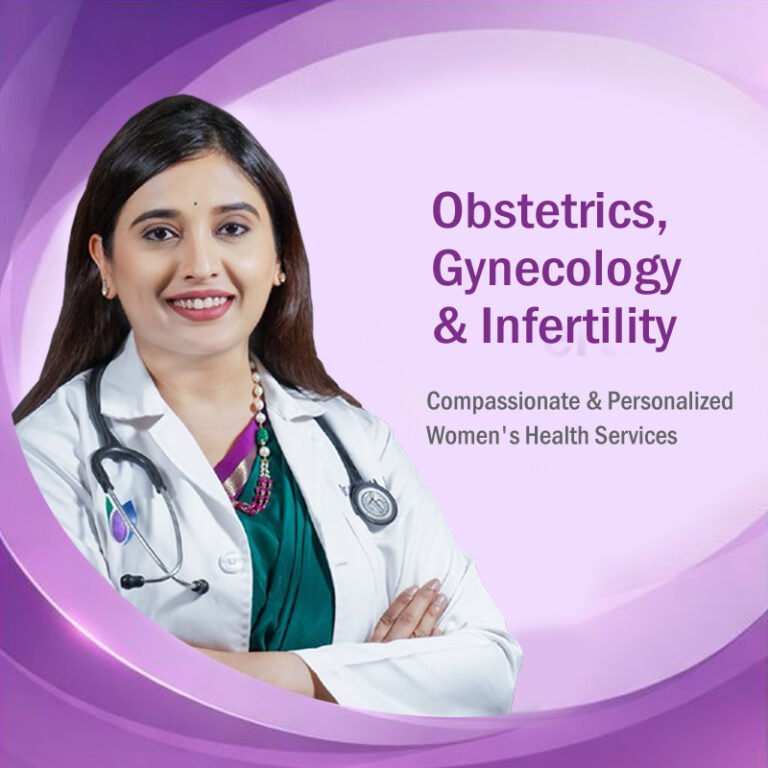
Meet Your Doctor: Dr. Samiksha Jain
Dr. Samiksha Jain is a renowned Obstetrician, Gynecologist, and Fertility Specialist dedicated to providing evidence-based and compassionate women’s healthcare. She completed her MBBS followed by MD (Obstetrics & Gynecology) as a Gold Medalist and further enhanced her expertise through Fellowship in Reproductive Medicine (Bangalore), Fellowship in Minimal Access Surgery (Bangalore), and an Advanced Diploma in Reproductive Medicine (Germany). Her extensive training enables her to combine fertility medicine, advanced gynecological surgery, pregnancy care, and minimally invasive procedures into a comprehensive treatment approach.
Her special expertise in Minimal Access Surgery makes her particularly well-equipped to perform advanced laparoscopic and hysteroscopic procedures safely and effectively. Women with infertility, pelvic pain, fibroids, uterine abnormalities, ovarian cysts, or endometriosis benefit from a treatment plan that emphasizes accurate diagnosis, organ preservation whenever possible, and quicker recovery. This integrated approach helps women across Nagpur, in Maharashtra, in India receive individualized care based on their unique reproductive health needs.
What Are Laparoscopy and Hysteroscopy?
Laparoscopy and hysteroscopy are two different minimally invasive procedures used in gynecology, but they serve complementary purposes. Laparoscopy is performed through very small incisions made on the abdomen. A laparoscope, which is a thin telescope-like instrument attached to a high-definition camera, is inserted to visualize the uterus, ovaries, fallopian tubes, pelvic cavity, and surrounding organs. Special surgical instruments can also be introduced through additional tiny openings, allowing treatment during the same procedure.
Hysteroscopy, on the other hand, focuses entirely on the inside of the uterus. A slender hysteroscope is gently passed through the cervix into the uterine cavity, allowing the doctor to directly examine the lining of the uterus. Since the instrument enters through the natural opening of the cervix, no external incision is required. This procedure is especially useful for evaluating abnormal bleeding, uterine polyps, adhesions, congenital uterine abnormalities, retained tissue, and recurrent miscarriage.
Together, these procedures provide a comprehensive evaluation of both the inside and outside of the reproductive organs. Many women undergoing infertility evaluation or recurrent pregnancy loss assessment benefit from having both procedures because they offer detailed information that cannot always be obtained through ultrasound alone. For women seeking advanced gynecological treatment in Nagpur, in Maharashtra, in India, these procedures often eliminate uncertainty and guide the most appropriate treatment plan.
Why Are These Procedures So Important?
Many gynecological disorders produce similar symptoms such as pelvic pain, heavy menstrual bleeding, infertility, irregular cycles, painful periods, or repeated miscarriages. Although ultrasound and laboratory investigations provide valuable information, they cannot always reveal every structural abnormality. Laparoscopy and hysteroscopy allow direct visualization of the reproductive organs, making diagnosis significantly more accurate.
Another major advantage is that diagnosis and treatment can frequently occur during the same procedure. If a fibroid, ovarian cyst, adhesion, endometriosis lesion, uterine septum, or polyp is discovered, it can often be treated immediately without requiring another surgery. This reduces repeated hospital visits, shortens recovery, and minimizes emotional stress for the patient.
For women trying to conceive, accurate diagnosis is especially valuable. Conditions that interfere with implantation or fertilization may remain undetected for years without minimally invasive evaluation. Procedures like Laparoscopy & Hysteroscopy often become an important step before recommending treatments such as IUI, IVF, or ICSI.
Common Conditions Diagnosed and Treated
Modern minimally invasive gynecological surgery is used for diagnosing and treating numerous reproductive disorders. Women experiencing chronic pelvic pain often undergo laparoscopy to identify hidden endometriosis, adhesions, pelvic inflammatory disease, ovarian cysts, or tubal abnormalities. Similarly, women suffering from heavy menstrual bleeding or repeated pregnancy loss frequently benefit from hysteroscopy to evaluate the uterine cavity.
Some of the most common conditions managed through these procedures include:
- Endometriosis
- Fibroids
- Ovarian cysts
- Blocked fallopian tubes
- Hydrosalpinx
- Pelvic adhesions
- Uterine polyps
- Uterine septum
- Intrauterine adhesions (Asherman’s Syndrome)
- Congenital uterine abnormalities
- Ectopic pregnancy in selected cases
- Abnormal uterine bleeding
Many of these conditions are also managed alongside Fibroids, Endometriosis & Ovarian Cysts Treatment and broader Reproductive System Disease Treatment.
Laparoscopy in Fertility Evaluation
Infertility affects many couples even when basic investigations appear normal. In these situations, laparoscopy often reveals hidden pelvic conditions that cannot be detected through routine ultrasound. Mild endometriosis, pelvic adhesions, tubal disease, and subtle ovarian abnormalities may all contribute to infertility despite apparently normal scans.
During fertility evaluation, laparoscopy allows the doctor to assess the uterus, ovaries, fallopian tubes, and pelvic cavity directly. Tubal patency testing may also be performed during the procedure to determine whether the fallopian tubes are open. If adhesions or endometriosis are identified, treatment can often be completed during the same surgery, potentially improving fertility outcomes.
Because fertility depends on multiple interacting factors, laparoscopy is usually combined with Male & Female Fertility Evaluation and individualized fertility planning. Depending on the findings, the doctor may recommend natural conception, ovulation induction, IUI, or IVF.
Role of Hysteroscopy in Women’s Health
Hysteroscopy has become one of the most valuable procedures for evaluating the uterine cavity. Women with abnormal uterine bleeding, repeated implantation failure, recurrent miscarriage, or suspected uterine abnormalities often benefit significantly from direct visualization of the uterine lining.
Unlike blind procedures, hysteroscopy allows the surgeon to see the exact location and size of abnormalities inside the uterus. Polyps, septa, adhesions, retained products, and small fibroids projecting into the uterine cavity can frequently be removed during the same sitting. This increases diagnostic accuracy while reducing the need for multiple interventions.
Women preparing for fertility treatments often undergo hysteroscopy when implantation problems are suspected. Ensuring a healthy uterine cavity before procedures like IVF may improve treatment planning and reproductive outcomes. It also complements services such as Advanced Infertility Treatment for couples experiencing prolonged infertility.
Advantages of Minimally Invasive Surgery
One of the greatest strengths of laparoscopy and hysteroscopy is that they offer excellent surgical precision while minimizing physical trauma. Compared with traditional open surgery, patients usually experience smaller scars, less postoperative pain, reduced blood loss, shorter hospital stays, quicker return to routine activities, and faster overall recovery.
The magnified surgical view also allows the surgeon to operate with exceptional precision while preserving healthy tissues whenever possible. This is especially important in women wishing to maintain future fertility. Whether removing ovarian cysts, treating endometriosis, or correcting uterine abnormalities, minimally invasive surgery aims to improve outcomes while reducing complications.
Because recovery is generally faster, women often resume normal activities much earlier than after conventional surgery. For patients in Nagpur, in Maharashtra, in India, this means less disruption to family life, work responsibilities, and overall quality of life while still receiving advanced gynecological treatment.
Who May Benefit from Laparoscopy or Hysteroscopy?
Not every gynecological condition requires surgery, but these procedures become extremely valuable when symptoms persist despite treatment or when imaging cannot provide a definite diagnosis. Women may benefit from minimally invasive evaluation if they experience chronic pelvic pain, infertility, repeated miscarriage, abnormal bleeding, severe menstrual pain, ovarian cysts, suspected endometriosis, uterine abnormalities, or recurrent IVF failure.
The decision is always individualized after reviewing medical history, examination findings, imaging reports, fertility goals, and overall health. A specialist determines whether laparoscopy, hysteroscopy, or a combination of both procedures would provide the greatest benefit. Careful patient selection ensures that surgery is performed only when medically appropriate.
Preparing for Laparoscopy and Hysteroscopy
Proper preparation is an important part of successful minimally invasive gynecological surgery. Before recommending laparoscopy or hysteroscopy, the doctor carefully reviews the patient’s complete medical history, menstrual cycle, previous surgeries, medications, allergies, pregnancy status, fertility goals, and any existing medical conditions. A physical examination, pelvic ultrasound, blood investigations, and other necessary tests may also be advised to ensure the procedure can be performed safely. Good preparation allows the surgical team to plan every step carefully and reduces unnecessary risks.
Patients are usually advised regarding fasting before surgery, medications that may need temporary adjustment, and what to expect on the day of the procedure. Depending on the reason for surgery, hysteroscopy may sometimes be scheduled during a particular phase of the menstrual cycle to obtain the clearest view of the uterine cavity. Women undergoing fertility evaluation may also receive additional counseling regarding how the surgical findings could influence future treatment decisions such as IUI, IVF, or ICSI.
Careful communication before surgery helps reduce anxiety. When patients understand why the procedure is being performed, what may be treated during surgery, and how recovery usually progresses, they approach treatment with greater confidence. Women undergoing minimally invasive surgery in Nagpur, in Maharashtra, in India benefit greatly from this individualized preoperative planning.
What Happens During Laparoscopy?
Laparoscopy is generally performed under anesthesia to ensure patient comfort throughout the procedure. After the patient is asleep, a very small incision is usually made near the umbilicus, through which a laparoscope containing a high-definition camera is introduced. Carbon dioxide gas is gently used to create working space inside the abdomen, allowing clear visualization of the pelvic organs. Additional tiny incisions may be created to introduce specialized surgical instruments if treatment is required.
The surgeon carefully examines the uterus, ovaries, fallopian tubes, pelvic lining, bowel surface, and surrounding reproductive structures. If abnormalities such as endometriosis, ovarian cysts, adhesions, hydrosalpinx, or fibroids are identified, many of them can be treated immediately during the same procedure. This ability to diagnose and treat simultaneously is one of the greatest advantages of minimally invasive surgery.
Because the incisions are very small, postoperative discomfort is generally much less than with traditional open surgery. Patients often recover more quickly and can usually return to normal daily activities earlier. Women who require Fibroids, Endometriosis & Ovarian Cysts Treatment frequently benefit from this minimally invasive approach whenever appropriate.
What Happens During Hysteroscopy?
Unlike laparoscopy, hysteroscopy requires no abdominal incision because the hysteroscope enters naturally through the cervix into the uterus. The uterine cavity is gently expanded using a sterile fluid, allowing the surgeon to inspect the lining with excellent visibility. Modern high-definition hysteroscopes provide detailed images that help identify even small abnormalities which may otherwise remain undetected.
If uterine polyps, fibroids projecting into the cavity, adhesions, uterine septum, or retained tissue are identified, they can often be removed during the same procedure using miniature surgical instruments passed through the hysteroscope. This avoids multiple operations and significantly improves patient convenience.
Diagnostic hysteroscopy may take only a short time, whereas operative hysteroscopy may require additional time depending on the complexity of the condition being treated. Because no external incision is required, recovery is usually rapid. Many women return home on the same day with only mild discomfort. Women undergoing Advanced Infertility Treatment frequently benefit from hysteroscopy before fertility procedures when uterine abnormalities are suspected.
Recovery After Minimally Invasive Surgery
Recovery following laparoscopy or hysteroscopy is generally much quicker than recovery after conventional open surgery. Most patients experience only mild discomfort, which gradually improves over the next few days. Some abdominal bloating or shoulder discomfort may occur temporarily after laparoscopy because of the gas used during the procedure, but these symptoms usually resolve naturally.
Women are encouraged to walk gently soon after surgery, maintain adequate hydration, follow prescribed medications, and attend scheduled follow-up appointments. Heavy lifting and strenuous physical activity may need to be avoided for a short period depending on the nature of the procedure. Recovery recommendations vary according to the type of surgery performed and the patient’s overall health.
One of the major benefits of minimally invasive surgery is the faster return to normal life. Smaller wounds generally heal quickly, postoperative pain is reduced, cosmetic results are better, and hospitalization is usually shorter. For women balancing work, family responsibilities, and healthcare in Nagpur, in Maharashtra, in India, these advantages are especially meaningful.
How These Procedures Improve Fertility
Many fertility problems arise because of structural abnormalities that interfere with ovulation, fertilization, embryo transport, or implantation. Laparoscopy and hysteroscopy allow these abnormalities to be identified and corrected whenever possible. Removing pelvic adhesions, treating endometriosis, opening blocked reproductive pathways in selected cases, removing uterine polyps, correcting uterine septum, or excising submucosal fibroids may improve the reproductive environment for natural conception or assisted reproductive techniques.
For some couples, surgery itself significantly improves fertility. Others may still require fertility treatments afterward, but surgical correction often increases the likelihood of successful outcomes. Following surgery, the fertility specialist may recommend natural conception, ovulation induction, IUI, IVF, or ICSI, depending on the overall fertility evaluation.
Because fertility is influenced by both partners, surgical findings are always interpreted together with Male & Female Fertility Evaluation. This comprehensive approach allows treatment to remain personalized rather than relying on a single procedure alone.
Possible Risks and Complications
Like every medical procedure, laparoscopy and hysteroscopy carry certain risks, although serious complications are uncommon when performed by experienced specialists. Possible risks may include bleeding, infection, injury to nearby organs, anesthesia-related complications, or fluid-related issues during hysteroscopy. Fortunately, these complications occur infrequently, particularly in centers experienced in minimally invasive gynecologic surgery.
Careful patient selection, thorough preoperative evaluation, advanced surgical equipment, and experienced surgical technique significantly reduce these risks. Following postoperative instructions carefully also contributes to smooth recovery. Patients should contact their doctor immediately if they develop severe abdominal pain, excessive bleeding, fever, persistent vomiting, or any concerning symptoms after surgery.
Understanding potential risks should not create unnecessary fear. Instead, informed discussion helps patients make confident decisions based on realistic expectations. The overwhelming majority of women recover well and benefit significantly from minimally invasive treatment.
Who Should Consider These Procedures?
Laparoscopy and hysteroscopy are recommended only when medically indicated. Women experiencing unexplained infertility, recurrent miscarriage, severe menstrual pain, chronic pelvic pain, abnormal uterine bleeding, ovarian cysts, uterine fibroids, suspected endometriosis, repeated implantation failure, or congenital uterine abnormalities are among those who may benefit from these advanced procedures.
The decision is based on multiple factors including symptoms, ultrasound findings, age, fertility goals, previous treatments, reproductive history, and overall health. Every woman requires an individualized treatment strategy rather than a standardized approach. Sometimes surgery provides the definitive solution, while in other situations it becomes one important step before further fertility treatment.
Women who have previously undergone unsuccessful fertility treatment may especially benefit from detailed evaluation through minimally invasive surgery because previously undetected abnormalities can occasionally explain repeated treatment failure.
Why Choosing an Experienced Gynecologic Surgeon Matters
Successful minimally invasive surgery depends not only on modern equipment but also on surgical expertise. An experienced gynecologic surgeon understands how to diagnose complex reproductive disorders accurately while preserving healthy reproductive tissues whenever possible. This is particularly important for women who hope to conceive in the future, because fertility preservation often requires delicate surgical decision-making.
A specialist trained in reproductive medicine and minimal access surgery can integrate surgical findings with long-term fertility planning, pregnancy care, and overall gynecological health. Women requiring treatment for infertility, fibroids, endometriosis, uterine abnormalities, or ovarian cysts benefit from coordinated management rather than fragmented care.
Patients in Nagpur, in Maharashtra, in India often prefer specialists who can combine advanced surgery with fertility expertise and comprehensive women’s healthcare. This continuity allows treatment decisions to remain consistent from diagnosis through recovery and future pregnancy planning.
Frequently Asked Questions
1. What is the difference between laparoscopy and hysteroscopy?
Laparoscopy is performed through small abdominal incisions to examine the uterus, ovaries, and fallopian tubes. Hysteroscopy is performed by inserting a thin instrument through the cervix to directly examine the inside of the uterine cavity. Both procedures serve different purposes and may be performed together when clinically indicated.
2. Is laparoscopy a major surgery?
Laparoscopy is a minimally invasive surgical procedure. It involves small incisions, usually causes less postoperative pain, allows for faster recovery, and generally requires a shorter hospital stay compared to traditional open surgery.
3. Does hysteroscopy require an abdominal incision?
No. Hysteroscopy does not require any external abdominal incision. A specialized instrument is gently passed through the cervix into the uterus to examine or treat conditions within the uterine cavity.
4. Can these procedures help treat infertility?
Yes. If infertility is caused by conditions such as endometriosis, pelvic adhesions, uterine polyps, uterine septum, fibroids, or other structural abnormalities, laparoscopy and hysteroscopy play an important role in both diagnosis and treatment, helping improve fertility outcomes in appropriate cases.
5. When can pregnancy be planned after surgery?
The ideal time to plan a pregnancy depends on the type of surgery performed, the recovery process, and the underlying medical condition. Your gynecologist will provide individualized recommendations after evaluating your recovery during follow-up visits.
6. How long does recovery take after these procedures?
Most women are able to gradually resume their normal daily activities within a few days after minimally invasive surgery. However, complete recovery depends on the specific procedure performed and the individual’s healing process.
7. Are laparoscopy and hysteroscopy safe procedures?
Yes. When performed by an experienced gynecologic surgeon, laparoscopy and hysteroscopy are generally considered safe procedures. Like any surgical procedure, they carry certain risks, but serious complications are relatively uncommon.
8. Will I still need IVF after these procedures?
Every patient’s fertility journey is unique. Some women may conceive naturally after surgery, while others may still require treatments such as IVF or IUI. The most appropriate treatment plan is determined after a comprehensive fertility evaluation.
Laparoscopy & Hysteroscopy in Nagpur represent a major advancement in modern gynecological care. These minimally invasive procedures provide highly accurate diagnosis while allowing treatment of numerous reproductive disorders with smaller incisions, reduced discomfort, faster recovery, and excellent clinical outcomes. Whether the concern is infertility, endometriosis, fibroids, ovarian cysts, abnormal uterine bleeding, recurrent miscarriage, or uterine abnormalities, these procedures help create a personalized treatment pathway that focuses on both immediate relief and long-term reproductive health.
For women in Nagpur, in Maharashtra, in India, choosing an experienced specialist in minimally invasive gynecologic surgery ensures that every decision is based on careful evaluation, advanced surgical expertise, and compassionate patient care. With proper diagnosis, individualized treatment, and appropriate follow-up, laparoscopy and hysteroscopy can play a vital role in improving gynecological health, fertility outcomes, and overall quality of life.