

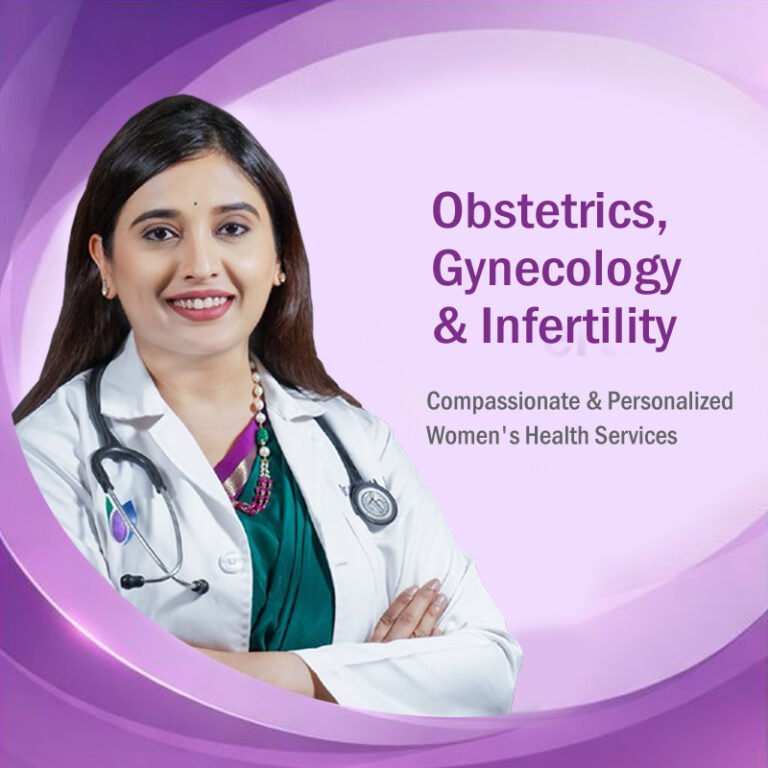
Meet Your Doctor: Dr. Samiksha Jain
Dr. Samiksha Jain is a highly qualified Obstetrician, Gynecologist, and Fertility Specialist dedicated to helping couples achieve their dream of parenthood through compassionate, evidence-based reproductive care. She completed her MBBS followed by MD (Obstetrics & Gynecology) as a Gold Medalist and further specialized through Fellowship in Reproductive Medicine (Bangalore), Fellowship in Minimal Access Surgery (Bangalore), and an Advanced Diploma in Reproductive Medicine (Germany). Her advanced training enables her to provide comprehensive infertility evaluation, IVF treatment, minimally invasive gynecological surgery, pregnancy care, and fertility preservation services.
Every infertility journey is unique. Dr. Samiksha Jain believes that successful IVF treatment begins with accurate diagnosis, individualized counseling, realistic expectations, and continuous support throughout every stage of treatment. Her expertise in reproductive medicine allows her to develop customized fertility plans based on age, ovarian reserve, hormonal profile, reproductive history, and the specific needs of each couple. Patients across Nagpur, in Maharashtra, in India benefit from her patient-centered approach and commitment to ethical fertility care.
What Is IVF (In Vitro Fertilization)?
In Vitro Fertilization, commonly known as IVF, is an assisted reproductive technique in which eggs are collected from the woman’s ovaries and fertilized with sperm in a specialized embryology laboratory. Once fertilization occurs, the resulting embryos are carefully monitored for several days before one or more healthy embryos are transferred into the uterus with the aim of achieving pregnancy. Any additional suitable embryos may be preserved for future use through cryopreservation when appropriate.
Unlike natural conception, where fertilization occurs inside the fallopian tube, IVF allows fertilization to occur under controlled laboratory conditions. This provides fertility specialists with greater control over the fertilization process and allows treatment for several conditions that may otherwise prevent pregnancy. IVF has become one of the most successful assisted reproductive technologies available today and continues to evolve with advances in embryology, laboratory techniques, and reproductive medicine.
For many couples seeking fertility treatment in Nagpur, in Maharashtra, in India, IVF offers an opportunity to overcome complex reproductive challenges while maintaining individualized treatment according to their unique medical circumstances.
Who May Need IVF Treatment?
IVF is recommended only after careful fertility evaluation and when it is considered the most appropriate treatment option. Not every couple experiencing infertility requires IVF. The decision depends on the cause of infertility, age of both partners, previous treatments, ovarian reserve, semen quality, and reproductive goals.
IVF may be considered in situations such as:
- Blocked or damaged fallopian tubes
- Severe male factor infertility
- Endometriosis affecting fertility
- Advanced maternal age
- Unexplained infertility
- Repeated unsuccessful IUI cycles
- Ovulation disorders that do not respond to treatment
- Diminished ovarian reserve in selected cases
- Genetic considerations requiring advanced reproductive planning
Before recommending IVF, specialists usually perform comprehensive Male & Female Fertility Evaluation. This systematic assessment ensures that IVF is truly the most beneficial option for the couple.
Understanding the Causes of Infertility
Infertility is a shared medical condition that may involve the woman, the man, both partners, or sometimes no identifiable cause despite detailed investigation. Female infertility may result from ovulation disorders, blocked fallopian tubes, endometriosis, uterine abnormalities, diminished ovarian reserve, or hormonal imbalance. Male infertility may involve reduced sperm count, poor sperm movement, abnormal sperm shape, or other reproductive factors.
Several women with hormonal disorders such as PCOD/PCOS Treatment experience irregular ovulation, making conception more difficult. Others may have structural conditions requiring Laparoscopy & Hysteroscopy before fertility treatment. Understanding the underlying diagnosis allows treatment to be personalized instead of proceeding directly to IVF unnecessarily.
This individualized approach improves treatment efficiency while helping couples understand every available reproductive option before making important decisions.
The IVF Treatment Process
Although every treatment plan is individualized, IVF generally follows several carefully coordinated steps. The process begins with ovarian stimulation, during which medications encourage the development of multiple mature eggs rather than the single egg typically released during a natural menstrual cycle. Throughout this stage, the doctor performs regular ultrasound examinations and hormonal monitoring to evaluate follicle growth and determine the optimal timing for egg retrieval.
Once the eggs have matured adequately, egg retrieval is performed using a minimally invasive procedure under appropriate anesthesia or sedation. The retrieved eggs are immediately transferred to the embryology laboratory, where they are combined with sperm collected from the male partner or donor when medically appropriate. Fertilization occurs under carefully controlled laboratory conditions.
The resulting embryos are then monitored by embryologists over several days. The healthiest embryo or embryos are selected for transfer into the uterus, while additional high-quality embryos may be frozen for future treatment if suitable. Each stage of the IVF process is carefully planned to maximize the likelihood of successful fertilization and implantation.
How IVF Differs from IUI
Many couples wonder whether IVF and IUI are the same treatment. Although both are assisted reproductive techniques, they differ significantly. In IUI, specially prepared sperm are placed directly inside the uterus around the time of ovulation, allowing fertilization to occur naturally inside the body. IVF, however, involves fertilization outside the body in the laboratory before embryo transfer.
IUI is generally considered for selected cases of mild male factor infertility, ovulation disorders, or unexplained infertility when the fallopian tubes are healthy. IVF is recommended for more complex fertility problems or when simpler treatments have not resulted in pregnancy. Choosing between these options depends entirely on the couple’s fertility evaluation rather than personal preference alone.
Understanding these differences helps couples make informed decisions regarding the most suitable treatment pathway.
Importance of Ovarian Reserve Assessment
One of the most important factors influencing IVF planning is ovarian reserve, which refers to the number and quality of eggs remaining in the ovaries. Ovarian reserve naturally declines with age, although the rate varies among women. Before beginning IVF, fertility specialists often recommend blood tests and ultrasound evaluation to assess ovarian reserve.
These investigations help estimate how the ovaries may respond to stimulation medications and assist in designing an individualized treatment protocol. Ovarian reserve testing does not predict whether pregnancy will definitely occur, but it provides valuable information for treatment planning and patient counseling.
Women considering delayed parenthood may also discuss Egg & Sperm Freezing if fertility preservation is appropriate for their circumstances.
Factors That Influence IVF Success
IVF success depends on multiple interacting factors rather than a single measurement. Maternal age remains one of the most important influences because egg quality naturally changes over time. Other important considerations include ovarian reserve, embryo quality, uterine health, sperm quality, underlying infertility diagnosis, overall medical health, body weight, lifestyle habits, and adherence to the treatment plan.
Success should never be measured solely by laboratory procedures. Good nutrition, stress management, careful monitoring, appropriate medication use, and timely follow-up all contribute to optimizing outcomes. Fertility specialists evaluate every factor carefully to develop the most effective treatment strategy for each couple.
Modern IVF centers emphasize individualized protocols rather than identical treatment plans for every patient. This personalized approach has significantly improved reproductive outcomes while providing couples with realistic expectations.
Preparing Emotionally and Physically for IVF
IVF involves both physical treatment and emotional commitment. Couples often experience hope, anxiety, anticipation, and uncertainty throughout the fertility journey. Open communication with the fertility specialist, realistic counseling, healthy lifestyle habits, and family support all contribute positively to the treatment experience.
Before starting IVF, patients are encouraged to optimize nutrition, maintain regular physical activity, avoid smoking and excessive alcohol consumption, manage chronic medical conditions, and follow medication instructions carefully. These measures help create the healthiest possible environment for fertility treatment.
Embryo Transfer: The Final Step of the IVF Cycle
Embryo transfer is one of the most significant stages of the IVF journey because it is the point at which the carefully developed embryo is placed inside the uterus. Although many couples consider this the most important step emotionally, it is actually the result of several earlier stages that include ovarian stimulation, egg retrieval, fertilization, and embryo development. The quality of each of these earlier stages contributes to the overall success of the treatment.
The embryo transfer procedure is usually simple, minimally invasive, and generally does not require major anesthesia. Using a thin catheter, the fertility specialist gently transfers the selected embryo into the uterine cavity under ultrasound guidance. The procedure is performed with great precision to provide the embryo with the best possible environment for implantation. Most women can return home the same day after a short observation period.
The number of embryos transferred depends on several medical factors including the woman’s age, embryo quality, reproductive history, and current clinical guidelines. The objective is always to maximize the chance of a healthy pregnancy while minimizing unnecessary risks associated with multiple pregnancies.
What Happens After Embryo Transfer?
Following embryo transfer, the body enters a period during which implantation may occur if the embryo successfully attaches to the uterine lining. During this time, patients are usually advised to continue prescribed medications exactly as instructed by their fertility specialist. These medications help support the uterine lining and optimize conditions for implantation.
Many women wonder whether complete bed rest is necessary after embryo transfer. In most cases, prolonged bed rest is not recommended unless specifically advised for an individual medical reason. Gentle daily activities may generally continue while avoiding strenuous exercise, heavy lifting, smoking, alcohol, and unnecessary physical stress. Emotional well-being and adequate rest are equally important during this waiting period.
The pregnancy test is usually scheduled approximately two weeks after embryo transfer. Testing too early may produce misleading results, so patients are encouraged to follow the timeline recommended by their fertility specialist rather than performing repeated home pregnancy tests prematurely.
Frozen Embryo Transfer (FET)
Modern IVF has advanced considerably with the development of embryo freezing technology. If high-quality embryos remain after the fresh embryo transfer, they may be cryopreserved for future use through Frozen Embryo Transfer (FET). This allows couples to undergo additional pregnancy attempts without repeating ovarian stimulation and egg retrieval if medically appropriate.
Frozen embryo transfer offers several advantages. It may reduce the physical burden of repeated stimulation cycles, preserve embryos for future family planning, and provide additional reproductive opportunities without starting the entire IVF process again. In selected clinical situations, fertility specialists may even recommend freezing all embryos first and planning embryo transfer during a later menstrual cycle when the uterine environment is considered more favorable.
The decision between fresh and frozen embryo transfer depends entirely on the patient’s medical condition, hormone levels, embryo development, and individualized treatment strategy. Women considering delayed pregnancy may also discuss Egg & Sperm Freezing as part of long-term fertility preservation planning.
Possible Risks and Complications of IVF
IVF is generally considered a safe medical procedure when performed by experienced fertility specialists. Nevertheless, like every medical treatment, it carries certain risks that should be discussed before beginning therapy. Possible complications may include ovarian hyperstimulation syndrome (OHSS) in selected women, multiple pregnancy when more than one embryo implants, minor bleeding after egg retrieval, infection, medication-related side effects, or emotional stress during treatment.
Modern IVF protocols have significantly reduced many of these risks through individualized ovarian stimulation, careful monitoring, improved laboratory techniques, and evidence-based embryo transfer practices. Regular ultrasound examinations and hormonal monitoring throughout treatment help fertility specialists adjust medications appropriately and reduce complications whenever possible.
Patients should remember that discussing potential risks is part of responsible medical counseling. The vast majority of IVF cycles proceed without serious complications, particularly when treatment is supervised by experienced reproductive medicine specialists.
How to Improve the Chances of IVF Success
Although no treatment can guarantee pregnancy, several factors may positively influence IVF outcomes. Maintaining a healthy body weight, following a balanced diet, avoiding tobacco and alcohol, controlling chronic medical conditions, taking medications exactly as prescribed, and attending all scheduled follow-up appointments contribute to better reproductive health. Emotional well-being and realistic expectations also play an important role throughout treatment.
Women with hormonal disorders such as PCOD/PCOS Treatment often benefit from appropriate hormonal management before IVF begins. Similarly, structural reproductive problems may require Laparoscopy & Hysteroscopy before embryo transfer to optimize the uterine environment. Every fertility journey is different, and individualized treatment planning remains one of the strongest contributors to successful outcomes.
Couples should understand that IVF success is influenced by multiple medical factors, including maternal age, ovarian reserve, embryo quality, uterine health, sperm quality, and the underlying cause of infertility. Close collaboration with the fertility specialist allows these factors to be addressed systematically.
Pregnancy Care After Successful IVF
A positive pregnancy test marks the beginning of another important phase rather than the end of treatment. Pregnancies achieved through IVF require routine prenatal care similar to naturally conceived pregnancies, although additional monitoring may be recommended during the early weeks depending on the individual clinical situation.
Regular ultrasound examinations, blood investigations, nutritional guidance, and maternal health monitoring help ensure healthy pregnancy progression. Women are encouraged to continue appropriate prenatal supplements and attend every scheduled follow-up visit. Services such as Antenatal Checkup, Complete Maternal Care, and High Risk Pregnancy Management become especially valuable whenever closer observation is required.
Most IVF pregnancies progress normally and result in healthy deliveries when supported by regular antenatal care and evidence-based obstetric management.
Emotional Support During the IVF Journey
The emotional aspect of infertility is often as challenging as the medical treatment itself. Couples may experience hope, anxiety, disappointment, uncertainty, and emotional fatigue throughout evaluation and treatment. Open communication with the fertility team, realistic expectations, family support, and professional counseling when required can greatly improve the overall treatment experience.
It is important for couples to remember that requiring IVF does not represent personal failure. Infertility is a recognized medical condition affecting millions of couples worldwide, and seeking treatment demonstrates a proactive commitment to building a family. Every IVF journey is unique, and treatment decisions should always be based on medical evidence rather than comparison with others.
Comprehensive fertility care therefore includes emotional reassurance alongside medical expertise, ensuring that couples feel informed and supported throughout every stage of treatment.
Why Choosing an Experienced IVF Specialist Matters
Successful IVF treatment depends on much more than advanced laboratory equipment. Accurate diagnosis, individualized ovarian stimulation protocols, skilled embryo handling, careful embryo transfer, and comprehensive patient counseling all contribute significantly to treatment outcomes. An experienced fertility specialist evaluates each couple’s reproductive history, hormonal profile, ovarian reserve, semen analysis, previous treatments, and long-term reproductive goals before designing an individualized IVF plan.
Dr. Samiksha Jain’s expertise in reproductive medicine, minimally invasive gynecological surgery, and fertility management allows patients to receive coordinated care under one roof. Whether fertility treatment involves IUI, IVF, ICSI, or advanced infertility management, treatment remains focused on achieving the healthiest possible pregnancy while prioritizing patient safety.
Couples seeking IVF treatment in Nagpur, in Maharashtra, in India benefit from choosing a fertility specialist who combines advanced reproductive technology with compassionate, ethical, and personalized care.
Frequently Asked Questions
1. What is IVF treatment?
IVF (In Vitro Fertilization) is an advanced fertility treatment in which eggs and sperm are fertilized in a laboratory. The resulting embryo is then transferred into the uterus to help achieve pregnancy.
2. Does every infertile couple need IVF?
No. Not every couple requires IVF. Many couples achieve a successful pregnancy with medications, ovulation induction, or IUI. IVF is recommended only when it is considered the most appropriate treatment option based on the individual’s fertility condition.
3. How long does IVF treatment take?
The duration of an IVF cycle varies depending on the individual’s treatment protocol. Throughout the process, the fertility specialist carefully monitors each stage, including ovarian stimulation, egg retrieval, embryo development, and embryo transfer.
4. Is a normal pregnancy possible after IVF?
Yes. Once the embryo successfully implants, an IVF pregnancy generally progresses like a naturally conceived pregnancy. Regular antenatal care and following your doctor’s recommendations are essential for a healthy pregnancy.
5. Is IVF a painful procedure?
Some stages of IVF may involve mild discomfort, but egg retrieval is usually performed under anesthesia or sedation to minimize pain. Every patient’s experience is different, and your fertility specialist will ensure appropriate care throughout the procedure.
6. What is Frozen Embryo Transfer (FET)?
Frozen Embryo Transfer (FET) is a procedure in which previously cryopreserved embryos are thawed and transferred into the uterus during a later menstrual cycle when the doctor determines that the timing is medically appropriate.
7. What factors affect IVF success?
IVF success depends on several factors, including the woman’s age, ovarian reserve, embryo quality, sperm quality, uterine health, the underlying cause of infertility, and the overall medical condition of both partners.
8. Is pregnancy monitoring necessary after IVF?
Yes. Regular Antenatal Checkup, ultrasound examinations, and ongoing pregnancy monitoring are essential after IVF to support healthy maternal and fetal outcomes.
IVF Treatment in Nagpur offers new hope to couples facing infertility by combining advanced reproductive technology with individualized medical care. From detailed fertility evaluation and ovarian stimulation to embryo transfer and pregnancy monitoring, every step of the IVF journey is carefully planned to maximize the chances of a healthy pregnancy. Modern IVF is not simply a laboratory procedure—it is a comprehensive treatment pathway that addresses both the medical and emotional aspects of infertility.
For couples in Nagpur, in Maharashtra, in India, consulting an experienced fertility specialist such as Dr. Samiksha Jain ensures that every treatment decision is based on accurate diagnosis, evidence-based reproductive medicine, and compassionate patient care. Whether IVF is the first recommended treatment or the next step after other fertility therapies, personalized planning, expert guidance, and continuous support provide the strongest foundation for achieving the dream of parenthood.